Grease Cleaning Pros in Covina provides top-notch grease cleaning services. We cater to restaurants, hotels, and commercial kitchens in Covina, CA. Our crew uses advanced vacuum trucks and industry-grade equipment. That ensures grease buildup is removed quickly and safely, keeping operations running smoothly.
More information about Grease Cleaning Pros in Covina

Find out more about Grease Cleaning Pros in Culver City

Website about Grease Cleaning Pros in Downey
Regular maintenance of grease traps is essential. It prevents plumbing disasters, reduces downtime, and ensures health-department compliance. Most grease trap cleanings take 30–90 minutes. Larger interceptors, however, require more time and heavy-duty equipment for a complete job.
Consider our services a safeguard against expensive emergency repairs. These can reach into the thousands and even risk fines or temporary closure. We handle all documentation and compliance records. Our flexible scheduling options, including off-hours appointments, reduce disruption to your business.
Why Proper Grease Management Is Important For Covina Businesses
Proper grease management in Covina goes beyond routine cleaning. It reduces the risk of slow drains, sink backups, and unpleasant sewer odors. Those issues can halt service and drive customers away.
Operational risks of neglected grease traps
When grease traps are not maintained, wastewater can back up into sinks and floor drains. That creates slip hazards and may force temporary kitchen closures. Airborne condensation and dissolved fats from dishwashing also contribute to buildup, damaging expensive equipment. Routine grease trap pumping helps catch these issues before they grow worse.
Financial and legal consequences of neglect
Ignoring grease trap maintenance can lead to fines from health or environmental agencies. Those fines can range from one thousand to fifty thousand dollars. Emergency repairs and restoration work are often more expensive than routine service fees. Detailed records of pumping and maintenance are crucial for compliance and for protecting a restaurant’s reputation.
Environmental impact and recycling benefits
Proper grease interceptor maintenance prevents used cooking oil from entering sewers and waterways. That oil can be recycled into biodiesel, animal feed supplements, soaps, and cosmetics. Recycling used oil significantly reduces greenhouse gas emissions and prevents water contamination. Used oil collection programs can also provide rebates and additional revenue opportunities for local restaurants.
| Risk Area | What Can Happen | Preventive Step |
|---|---|---|
| Operations | Slow drains, backups, odors, equipment damage | Maintain regular grease trap pumping and inspections |
| Financial and legal | Fines, emergency repairs, lost business, lawsuits | Maintain service records and compliance paperwork |
| Environmental concerns | Sewer contamination, water pollution, greenhouse gas emissions | Capture and recycle used cooking oil for reuse |
| Public image | Customer complaints, poor reviews, closures | Use certified providers for grease interceptor maintenance |
Warning Signs Your Grease Trap Or Interceptor Needs Immediate Attention
Spotting grease issues early is essential for maintaining kitchen efficiency and avoiding costly repairs. Pay attention to warning signs that suggest grease trap problems before they turn into major grease interceptor issues.
Slow-draining sinks and standing water in three-compartment sinks often indicate buildup inside the trap. Gurgling sounds from sinks or toilets and the presence of rotten-egg odors suggest decomposing grease producing hydrogen sulfide. Grease showing up in unusual places or greasy floors that persist after cleaning are obvious warning signs. Increased pest activity and standing water near traps also indicate a serious blockage that demands immediate attention.
When multiple fixtures are affected
Slowdown or backup in several fixtures usually points to a problem in the main line or interceptor, not just a single drain. Clogs that return after snaking often indicate deep deposits that require hydro jetting or professional grease trap pumping. Toilets that gurgle while sinks or dishwashers are in use may indicate main-line narrowing and an approaching failure.
Frequency indicators based on kitchen volume
Cleaning frequency depends on menu type and traffic volume. Many restaurants arrange service at 30–90 day intervals. Fry-heavy, high-volume kitchens may require grease trap pumping every month or every two weeks. Some fast-food operations may need weekly service. Many municipal rules require cleaning once grease and solids reach 25% of trap capacity. It is critical to monitor fill rates and maintain detailed pumping records.
Adjust service frequency according to trap size, customer volume, and local regulations to reduce emergencies. Regular monitoring and timely action can significantly reduce the risk of slow drains Covina businesses face and limit long-term grease interceptor problems.
Grease Trap Vs Grease Interceptor: What Covina Businesses Need To Know
The decision between a grease trap and a grease interceptor influences daily operations for restaurants and foodservice facilities. This section covers size, placement, maintenance, and other key factors in selecting the right commercial grease system for your location.
Differences In Size And Placement
Grease traps are compact units, often 20–50 gallons, and are typically placed under sinks. They are ideal for coffee shops, small bakeries, and kitchens with low grease output.
Grease interceptors are much larger vaults, often 500–5,000 gallons or more, and are usually installed outside underground. Restaurants, hotels, and food processors with high grease output need these larger interceptors.
How Maintenance And Equipment Needs Differ
Indoor trap service is faster and usually takes 30–90 minutes. Technicians access the units indoors, scrape the baffles, and use hand tools along with vacuum trucks. Grease trap pumping in Covina often involves local crews familiar with city codes.
Interceptor service requires heavy equipment and crews trained to remove heavy covers, pump thousands of gallons, clean compartments, and inspect tees and structure. This process is more complex and may include groundwater tests and structural checks.
Scheduling depends on grease volume. Interceptors are often pumped quarterly, with monthly service for high-volume sites. Grease traps are usually pumped based on fill levels and local code requirements.
Choosing The Right System For Your Site
Choose a system based on daily grease output, menu items, customer volume, available space, and local code. Small cafés usually opt for indoor traps. Bigger kitchens need interceptors that are sized for peak flow demand.
Collaborate with professionals like Grease Cleaning Pros to size systems, ensure compliance, and create a maintenance plan. Choosing the right system helps prevent shutdowns and supports efficient operation of commercial grease systems.
Grease Cleaning Pros Serving Covina
Local kitchens rely on effective grease management to maintain compliance and stay operational. Grease Cleaning Pros In Covina offers tailored solutions for restaurants, hotels, schools, and food processors. These services help minimize downtime and protect municipal systems.
About The Team And Service Area
Grease Cleaning Pros In Covina specializes in grease trap pumping Covina and interceptor services throughout the San Gabriel Valley. The team works in line with local health regulations while ensuring environmentally friendly disposal and recycling of used cooking oil.
Service Process And Documentation
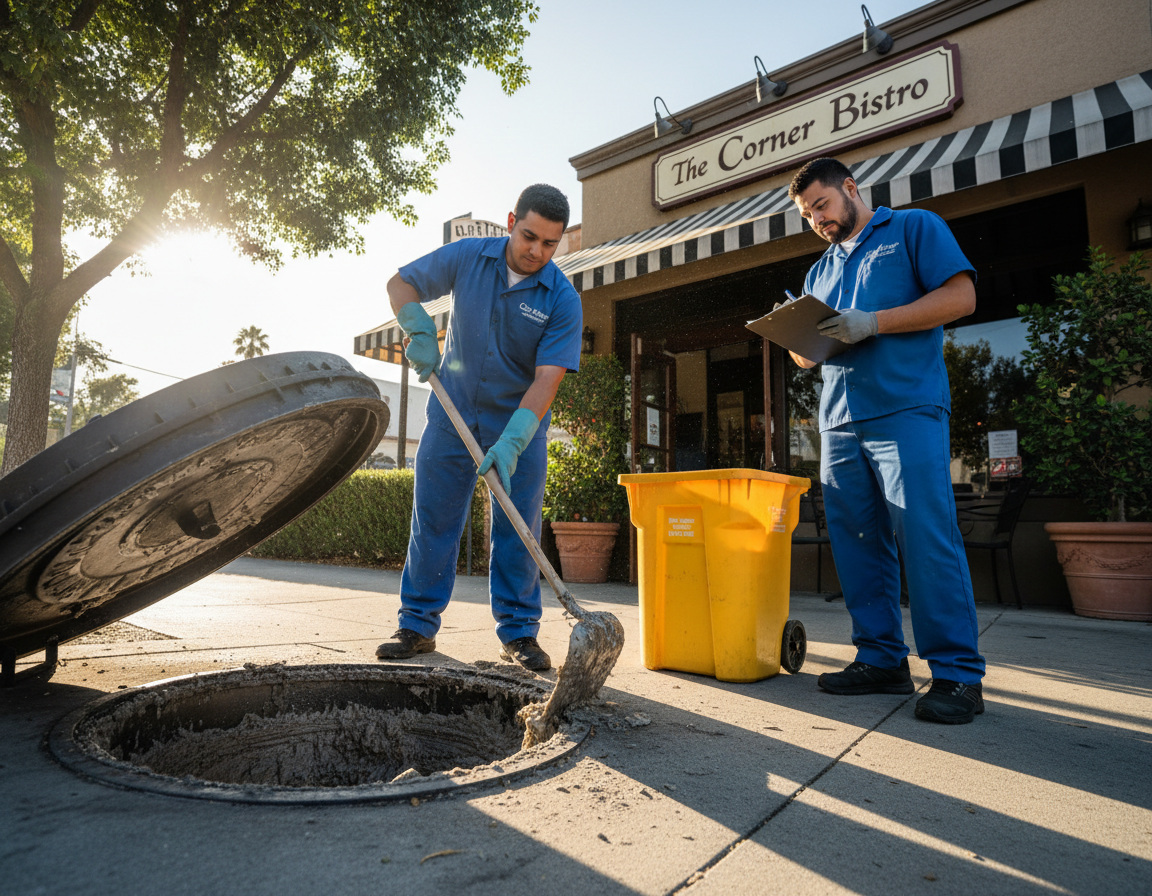
The process begins with locating and accessing grease traps or interceptors. Technicians measure grease depth and document conditions to ensure compliance. After that, vacuum pumping trucks are used to remove grease, wastewater, and solids.
After scraping the baffles and pressure washing the interior walls, they inspect the pipes and structural integrity. Once cleaned, systems are refilled with clean water. Clients receive documentation and pumping records that meet municipal and health-department standards.
Scheduling, Response Time, And Emergency Support
Flexible scheduling helps kitchens keep operating smoothly through off-hours visits. Most standard trap cleanings are completed in 30–90 minutes. Larger interceptors require more time and heavy-equipment access.
The company offers emergency grease cleaning for urgent blockages. They use quiet vacuum trucks to help minimize disruption. Their quick response times help businesses satisfy Covina grease service expectations and limit downtime.
Cleaning Methods And Technology That Work
Maintaining kitchen plumbing and grease interceptors demands a blend of methods and tools. Regular service reduces clogs, limits downtime, and supports compliance with local rules. The following sections outline common approaches and the technology behind reliable results.
Pumping and mechanical cleaning methods
Professional grease trap pumping uses vacuum trucks to remove the floating grease layer, wastewater, and settled solids. Afterward, trained technicians scrape the baffles and walls to loosen compacted material. Mechanical cleaning focuses on grease stuck to interior surfaces, using agitation or specialized blades to remove deposits.
After full service, crews refill the interceptor as needed to restore normal separation performance. Routine mechanical grease removal helps extend the life of the unit and limit emergency callouts.
Hydro jetting vs hot water and snaking
Hydro jetting Covina teams use high-pressure water to clean pipe walls and remove hardened grease, roots, and severe buildup. These pressures often reach thousands of PSI and restore the pipe interior without using harsh chemicals.
Using hot water may only melt grease for a short time and can push it farther downstream, where it re-hardens and causes more serious blockages. A drain snake may clear an immediate clog, but it often leaves grease layers attached to the pipe walls. Choose hydro jetting for recurring clogs, slow drains affecting multiple fixtures, or narrowed mains when you want long-lasting results.
Inspection and preventive maintenance tools
Camera inspections of the pipe interior help reveal buildup, cracks, and root intrusion. Regular measurements of grease thickness at inlets and outlets help determine service intervals based on kitchen volume and waste profiles.
Probes, gauges, and structural checklists are among the inspection tools used for grease interceptors to detect groundwater infiltration or chamber damage. Keeping detailed records of pumpings and inspections helps optimize schedules and makes municipal compliance reporting easier.
Reducing Grease Buildup And Stretching Maintenance Intervals
Small daily habits are the key to keeping kitchen systems clean. Simple routines help lower blockages, extend equipment life, and plan a smarter grease trap pumping schedule. These tips work well for busy operations by supporting Covina kitchen best practices and lowering long-term costs.
Train every employee to scrape plates and wipe pans before rinsing. Sink strainer baskets should be used and emptied often to prevent solids from entering the plumbing. Grease control should be built into onboarding, and one employee should be assigned to log drain observations every shift.
Emphasize that steam and dishwater can carry hidden fats into traps. Even small amounts add up over time, so consistent behavior is critical for reducing grease buildup and keeping operations smooth.
Operational changes and useful equipment
Place grease-catching pads under fryers and keep a dedicated waste-oil container at the line. Wipe cookware with paper towels before washing to reduce grease at the source. Strainers and floor drains should be cleaned on a fixed schedule so solids do not reach the trap.
Do not rely on hot water as your primary grease-control method. Using hot water can send fats downstream and create worse blockages later. Pair mechanical skimming, routine inspections, and a monitored grease trap pumping schedule for best results.
Used cooking oil recycling for revenue and sustainability
Used cooking oil should be collected in sealed, clearly labeled containers for professional pickup. Certified collectors such as Grease Cleaning Pros filter and transport oil for biodiesel, animal feed supplements, or soaps. Used cooking oil recycling helps lower greenhouse gas emissions and supports local sustainability efforts.
Many restaurants receive rebates or revenue from certified collection programs. Each gallon that is recycled helps reduce water contamination risk, supports corporate social responsibility, and lowers grease buildup in drains.
| Practice | Action | Benefit |
|---|---|---|
| Plate and pan scraping | Teach staff to remove solids before washing | Reduces solids entering the trap and lowers cleaning frequency |
| Strainers and drains | Empty and clean them several times per shift | Prevents clogs; improves drain flow |
| Grease-catching devices | Install pads and dedicated waste-oil containers | Stops grease at the source and makes maintenance easier |
| Hot-water control practices | Limit use for grease control; use mechanical options | Keeps fats from traveling downstream and hardening |
| Cooking oil recycling | Work with certified collectors for pickup | Supports sustainability goals and can generate revenue |
| Monitoring and documentation | Assign staff to record trap and drain checks | Supports a data-driven grease trap pumping schedule |
Final Thoughts
Effective grease management is essential for every commercial kitchen in Covina. Regular grease trap and interceptor maintenance is vital. It helps ensure smooth operations, avoid hefty fines, and protect a business’s reputation. By focusing on prevention, you can dodge costly repairs and cut down on maintenance costs over time.
Grease Cleaning Pros In Covina provides top-notch grease cleaning services. They provide documented records, flexible scheduling, and quick emergency response. Advanced techniques such as hydro jetting and vacuum pumping help ensure efficient and eco-friendly service. That approach makes it easier to document and defend maintenance efforts during inspections.
Business owners should keep a close eye on their maintenance schedules. They should keep detailed pumping records and educate staff about grease prevention. For dependable reliability, Grease Cleaning Pros In Covina offers regular pumping services and emergency assistance when needed. Routine maintenance supports smooth operations while also helping protect the environment.